
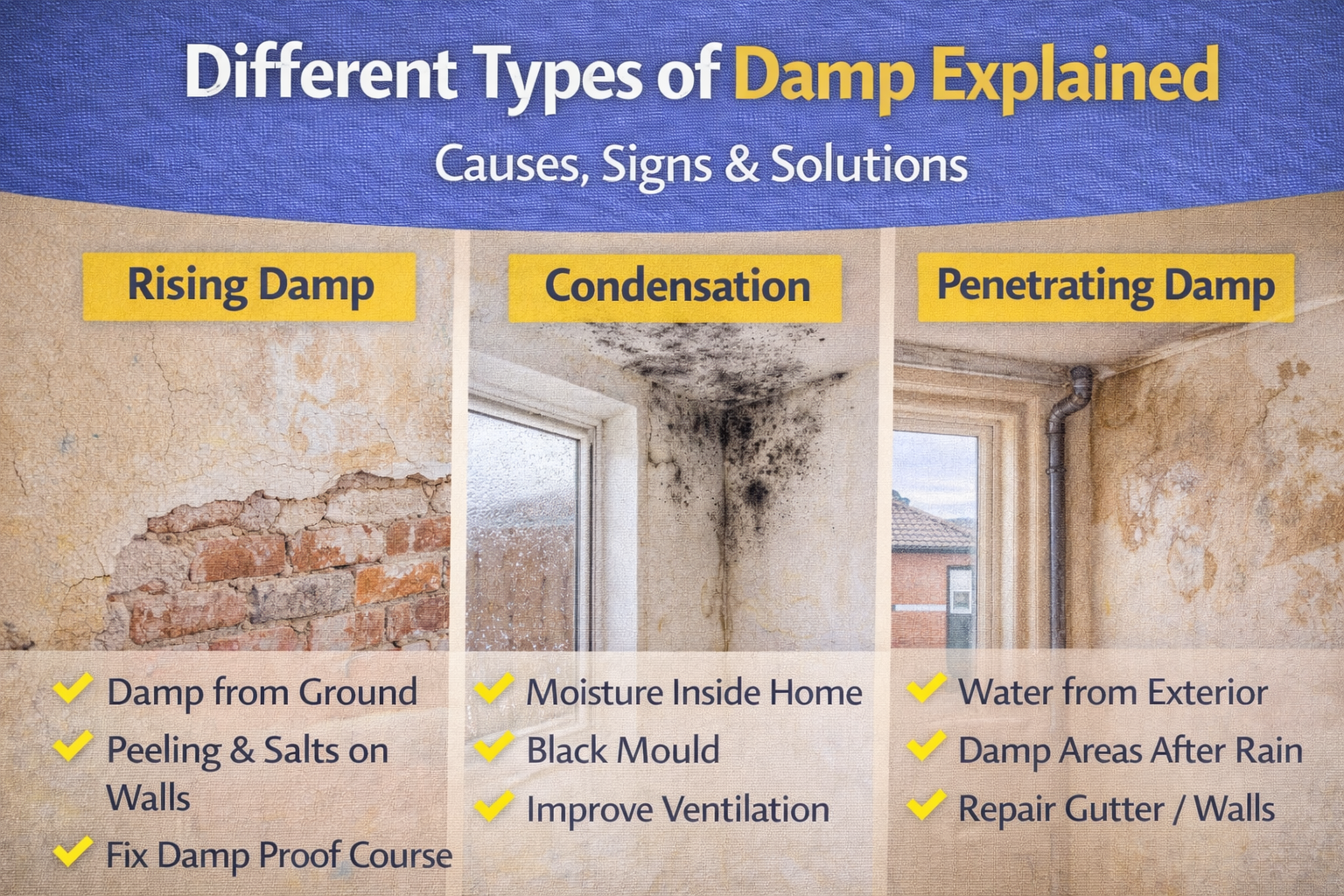
Damp is a common problem in UK homes, particularly in older properties. While many people refer to damp as a single issue, there are actually different types of damp, each with its own causes and treatments.
Understanding which type of damp you’re dealing with is essential, as treating the wrong problem can lead to wasted money and ongoing damage. In this guide, we explain the main types of damp, how to identify them, and what should be done to fix them properly.
1. Rising Damp
What Is Rising Damp?
Rising damp occurs when moisture from the ground travels upward through the walls by capillary action. This usually happens when the damp proof course (DPC) is missing, damaged, or bridged.
Common Signs of Rising Damp
- Damp patches on lower walls
- Peeling paint or wallpaper near the floor
- Crumbling or blown plaster
- White powdery salts on walls
- Rotting skirting boards
Rising damp normally affects ground-floor walls and can rise up to around one metre high.
2. Penetrating Damp
What Is Penetrating Damp?
Penetrating damp is caused by water entering the property through external defects. Unlike rising damp, it can occur at any height on walls.
Common Causes
- Cracked brickwork
- Damaged render
- Faulty guttering or downpipes
- Leaking roofs
- Poorly sealed windows or doors
Common Signs
- Localised damp patches
- Damp worsening after rain
- Flaking paint or plaster
Treating penetrating damp involves fixing the external source of water.
3. Condensation Damp
What Is Condensation?
Condensation is caused by warm, moist air coming into contact with cold surfaces, leading to water droplets forming inside the home.
Common Areas Affected
- Bathrooms
- Kitchens
- Bedrooms
- Corners of rooms
- Windows and ceilings
Signs of Condensation
- Black mould growth
- Water droplets on windows
- Damp patches on walls or ceilings
Condensation is often linked to poor ventilation rather than structural issues.
4. Lateral Damp
What Is Lateral Damp?
Lateral damp occurs when moisture enters walls sideways, usually in below-ground rooms such as basements or cellars.
Common Causes
- Earth-retaining walls
- Poor waterproofing
- Failed tanking systems
This type of damp often requires specialist treatment to prevent water ingress.
5. Plumbing-Related Damp
What Is Plumbing Damp?
Leaks from pipes, radiators, or appliances can cause damp patches that are often mistaken for rising or penetrating damp.
Signs
- Damp patches near bathrooms or kitchens
- Sudden appearance of moisture
- Damp worsening regardless of weather
Plumbing damp must be fixed at the source before any plaster repairs are carried out.
Why Correct Damp Diagnosis Matters
Treating damp without identifying the correct cause can lead to:
- Ongoing moisture problems
- Repeated plaster damage
- Unnecessary costs
- Mould growth
For example, installing a damp proof course won’t solve condensation, and improving ventilation won’t fix penetrating damp.
Can You Plaster Over Damp?
No — plastering over damp without treatment is only a temporary fix. Moisture and salts will continue to damage new plaster, leading to cracking and failure.
Proper damp treatment should always come before replastering.
How Damp Is Usually Treated
Treatment depends on the type of damp but may include:
- Damp proof course installation
- External repairs
- Improved ventilation
- Tanking systems
- Damp-resistant replastering
A professional assessment ensures the correct solution is used.
Final Thoughts
Damp problems vary widely, and understanding the different types of damp is key to fixing them properly. Rising damp, penetrating damp, condensation, lateral damp and plumbing leaks all require different treatments.
If you’re experiencing damp issues in your home, professional advice can help identify the cause and prevent costly repeat repairs.